
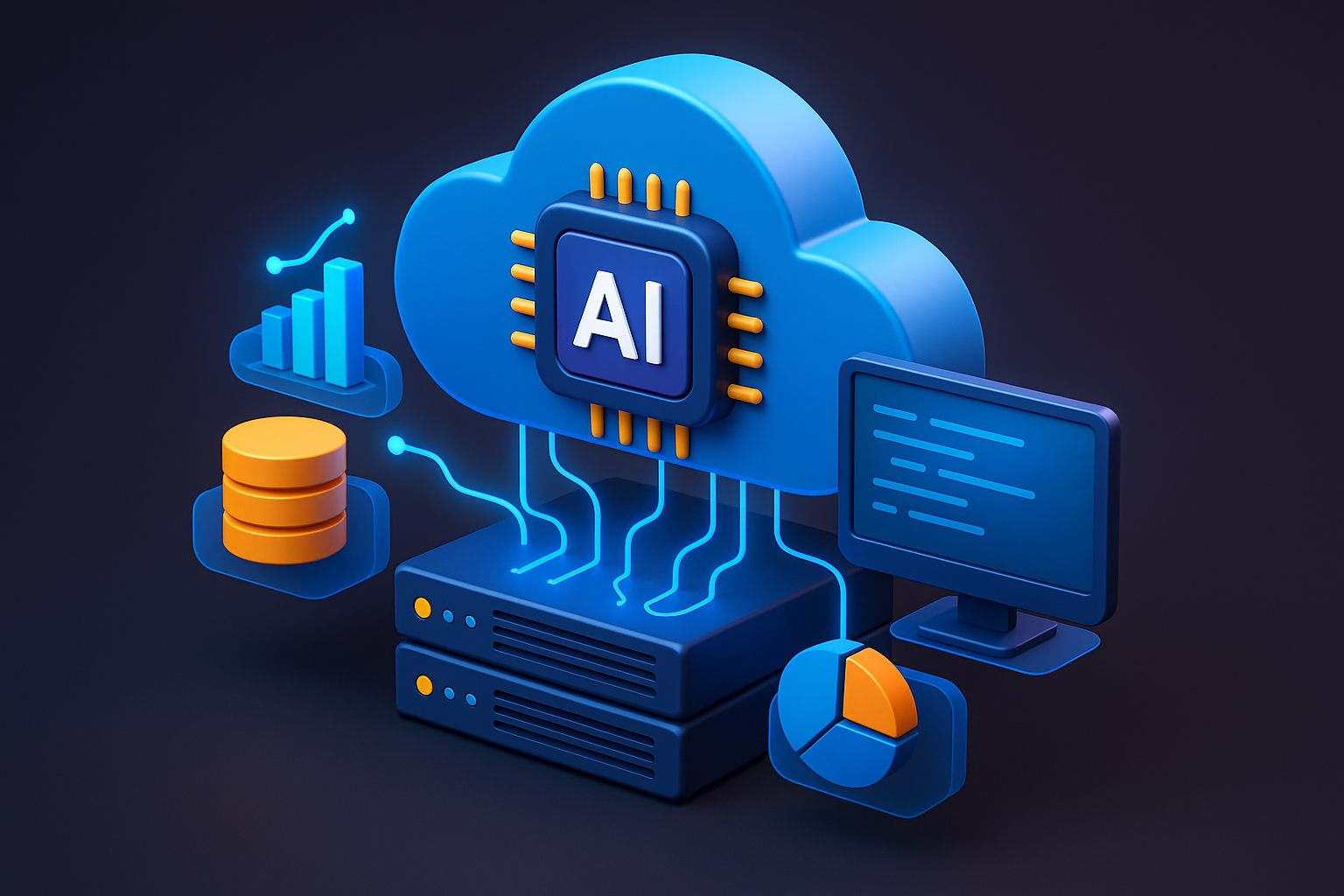
Cloud computing has rapidly transformed the digital world by offering scalable storage, on-demand computing power, and flexible infrastructure. But as applications and data continue to grow, the next major leap comes from integrating artificial intelligence into the cloud. AI-enhanced cloud services combine the computational strength of cloud platforms with the intelligence of AI algorithms. This powerful combination enables enterprises to process massive datasets, automate business operations, and gain insights that were previously impossible. From predictive analytics to conversational AI, cloud platforms now act as intelligent engines that accelerate innovation across industries.
AI-enhanced cloud services refer to cloud platforms that incorporate artificial intelligence capabilities such as machine learning, natural language processing, computer vision, and automation. Instead of building complex AI models from scratch, developers can access ready-made AI tools through APIs or cloud-based services. Companies like Amazon Web Services (AWS), Google Cloud, Microsoft Azure, and IBM Cloud offer AI-powered features such as smart analytics tools, automated workflows, speech recognition APIs, recommendation engines, and scalable training environments for machine learning models. These services reduce development time, increase efficiency, and make AI accessible to both small businesses and large corporations.
AI greatly enhances how data is stored, managed, and accessed in cloud environments. AI-powered storage solutions can automatically categorize files, detect anomalies, optimize storage usage, and even predict potential failures. Through intelligent indexing and search, organizations can find data quickly and reduce manual processes. AI also improves data backup strategies by identifying important files, detecting unusual access patterns, and suggesting the best storage tiers. In industries that handle huge amounts of data—like healthcare, finance, and e-commerce—AI-driven cloud storage ensures faster access, better security, and optimized resource allocation.
Cloud platforms use AI to automate complex tasks and streamline workflows. For example, AI can automatically allocate computing resources based on real-time demand, reducing costs and improving performance. Intelligent autoscaling ensures applications stay responsive during peak traffic without overusing resources. In DevOps, AI-enhanced cloud tools automate monitoring, bug detection, log analysis, and deployment pipelines, reducing human errors and offering more efficient software development cycles. Businesses also use AI bots and automation tools to handle repetitive tasks, freeing employees to focus on strategic decision-making.
One of the biggest advantages of AI-enhanced cloud services is the ability to turn raw data into actionable insights. With AI-powered analytics tools, organizations can analyze data patterns, predict trends, and make better decisions. Predictive analytics helps companies forecast sales, detect fraud, optimize supply chains, and understand customer behavior. Machine learning models hosted in the cloud can process large datasets in real time, generating insights at incredible speed. These analytics tools democratize access to intelligence, helping even small businesses make smarter, data-driven decisions without needing large data science teams.
AI-enhanced cloud platforms offer powerful machine learning environments where developers can train and deploy models without requiring expensive hardware. Cloud providers offer pre-built frameworks like TensorFlow, PyTorch, and Scikit-Learn. They also provide dedicated GPU/TPU clusters for heavy AI computation. This allows developers and researchers to build advanced AI models such as recommendation systems, fraud detection engines, and conversational agents. With MLOps tools, organizations can automate the entire lifecycle—training, testing, deployment, monitoring, and updating—making cloud-based machine learning both scalable and reliable.
Security remains a top priority in cloud computing, and AI significantly strengthens security measures. AI algorithms detect unusual network traffic, identify potential cyber threats, and respond in real time. Machine learning models analyze user behavior to detect anomalies, helping prevent data breaches, phishing attacks, and unauthorized access. AI also automates compliance checks, vulnerability scanning, and policy enforcement. Cloud platforms integrate AI-driven identity verification, encryption management, and access control systems to ensure a highly secure infrastructure. As cyber threats grow more sophisticated, AI becomes an essential layer of cloud defense.
AI-enhanced cloud services are transforming industries worldwide. In healthcare, AI processes medical images, predicts patient outcomes, and supports remote diagnostics. In finance, AI-powered cloud platforms detect fraudulent transactions, assess credit risks, and automate financial reporting. Retailers use cloud-based AI to personalize shopping experiences through recommendation engines and customer analytics. In manufacturing, AI predicts equipment failures, improves production efficiency, and supports robotics systems. Even government agencies rely on AI-driven cloud services for data management, smart city infrastructure, and digital services delivery.
AI-enhanced cloud services are not just a technological trend—they represent the future foundation of digital transformation. As AI capabilities continue to grow, cloud platforms will become even more intelligent, autonomous, and user-friendly. This integration will help businesses innovate faster, improve efficiency, and make better decisions across all sectors. The future will bring self-optimizing applications, fully automated workflows, and predictive systems that adjust operations instantly. Organizations that embrace AI-enhanced cloud services today will lead the next generation of digital innovation, shaping a smarter and more connected world.
AI-enhanced cloud services refer to cloud platforms that incorporate artificial intelligence capabilities such as machine learning, natural language processing, computer vision, and automation. Instead of building complex AI models from scratch, developers can access ready-made AI tools through APIs or cloud-based services. Companies like Amazon Web Services (AWS), Google Cloud, Microsoft Azure, and IBM Cloud offer AI-powered features such as smart analytics tools, automated workflows, speech recognition APIs, recommendation engines, and scalable training environments for machine learning models. These services reduce development time, increase efficiency, and make AI accessible to both small businesses and large corporations.
AI greatly enhances how data is stored, managed, and accessed in cloud environments. AI-powered storage solutions can automatically categorize files, detect anomalies, optimize storage usage, and even predict potential failures. Through intelligent indexing and search, organizations can find data quickly and reduce manual processes. AI also improves data backup strategies by identifying important files, detecting unusual access patterns, and suggesting the best storage tiers. In industries that handle huge amounts of data—like healthcare, finance, and e-commerce—AI-driven cloud storage ensures faster access, better security, and optimized resource allocation.
Cloud platforms use AI to automate complex tasks and streamline workflows. For example, AI can automatically allocate computing resources based on real-time demand, reducing costs and improving performance. Intelligent autoscaling ensures applications stay responsive during peak traffic without overusing resources. In DevOps, AI-enhanced cloud tools automate monitoring, bug detection, log analysis, and deployment pipelines, reducing human errors and offering more efficient software development cycles. Businesses also use AI bots and automation tools to handle repetitive tasks, freeing employees to focus on strategic decision-making.
One of the biggest advantages of AI-enhanced cloud services is the ability to turn raw data into actionable insights. With AI-powered analytics tools, organizations can analyze data patterns, predict trends, and make better decisions. Predictive analytics helps companies forecast sales, detect fraud, optimize supply chains, and understand customer behavior. Machine learning models hosted in the cloud can process large datasets in real time, generating insights at incredible speed. These analytics tools democratize access to intelligence, helping even small businesses make smarter, data-driven decisions without needing large data science teams.
AI-enhanced cloud platforms offer powerful machine learning environments where developers can train and deploy models without requiring expensive hardware. Cloud providers offer pre-built frameworks like TensorFlow, PyTorch, and Scikit-Learn. They also provide dedicated GPU/TPU clusters for heavy AI computation. This allows developers and researchers to build advanced AI models such as recommendation systems, fraud detection engines, and conversational agents. With MLOps tools, organizations can automate the entire lifecycle—training, testing, deployment, monitoring, and updating—making cloud-based machine learning both scalable and reliable.
Security remains a top priority in cloud computing, and AI significantly strengthens security measures. AI algorithms detect unusual network traffic, identify potential cyber threats, and respond in real time. Machine learning models analyze user behavior to detect anomalies, helping prevent data breaches, phishing attacks, and unauthorized access. AI also automates compliance checks, vulnerability scanning, and policy enforcement. Cloud platforms integrate AI-driven identity verification, encryption management, and access control systems to ensure a highly secure infrastructure. As cyber threats grow more sophisticated, AI becomes an essential layer of cloud defense.
AI-enhanced cloud services are transforming industries worldwide. In healthcare, AI processes medical images, predicts patient outcomes, and supports remote diagnostics. In finance, AI-powered cloud platforms detect fraudulent transactions, assess credit risks, and automate financial reporting. Retailers use cloud-based AI to personalize shopping experiences through recommendation engines and customer analytics. In manufacturing, AI predicts equipment failures, improves production efficiency, and supports robotics systems. Even government agencies rely on AI-driven cloud services for data management, smart city infrastructure, and digital services delivery.
AI-enhanced cloud services are not just a technological trend—they represent the future foundation of digital transformation. As AI capabilities continue to grow, cloud platforms will become even more intelligent, autonomous, and user-friendly. This integration will help businesses innovate faster, improve efficiency, and make better decisions across all sectors. The future will bring self-optimizing applications, fully automated workflows, and predictive systems that adjust operations instantly. Organizations that embrace AI-enhanced cloud services today will lead the next generation of digital innovation, shaping a smarter and more connected world.